
You can build a simple loyalty program in five steps: pick one primary goal and target customers, design clear rewards tied to repeat visits or higher spend, choose a tracking method that fits your workflow (stamp card, POS module, or spreadsheet), launch with staff training and promotion plus a signup incentive, then measure participation and refine rules. Keep tiers achievable and tracking fast to avoid POS delays — follow the next section for practical setup tips and examples.
Key Takeaways
- Define one primary goal, target customer segments, and measurable success metrics (e.g., 15% more visits in six months).
- Choose simple, valuable rewards tied to desired behaviors and make the first reward easy to reach.
- Pick a fast, reliable tracking method that fits daily workflow (stamp card, POS module, or simple spreadsheet).
- Launch with clear messaging, staff training, and a short signup incentive (QR code and in-store prompts).
- Measure participation, repeat visits, AOV, and feedback; iterate changes monthly and document results.
Define Your Goals and Target Customers

Before you build rewards, decide what you want the program to do and who it should serve. Identify clear objectives: increase visit frequency, boost average order value, gather customer data, or encourage referrals. Pick one primary goal and one or two secondary goals so your efforts stay focused.
Next, profile your customers—segment by behavior, spend, demographics, and needs. Use sales records, surveys, and informal conversations to validate assumptions. Prioritize high-impact segments that align with your goals, like regular local shoppers or occasional big spenders.
Set measurable targets (e.g., 15% more visits in six months) and determine success metrics you’ll track. With goals and target customers defined, you’ll design a program that solves real business problems.
Choose Simple, Valuable Rewards
Now that you’ve picked goals and profiled customers, pick rewards that match those objectives and feel genuinely valuable to your key segments.
Offer options that are easy to understand and redeem: discounts, free items, exclusive access, or service upgrades. Tie rewards to behaviors you want to encourage—repeat visits, higher spend, referrals—so each reward advances your goals.
Keep tiers simple and attainable to avoid frustration; make the first reward reachable quickly to hook new members.
Use perceived value: bundle services or create time-limited offers to increase appeal without high cost. Ask a few loyal customers what they’d actually use, then test and iterate.
Clear, tangible rewards will drive participation and reinforce the relationship you’re building.
Pick an Easy-To-Use Tracking Method

Often the simplest tracking wins: choose a method you and your staff can use every day without extra training or friction. Pick one that fits your workflow—stamp cards, a POS-integrated loyalty module, or a simple spreadsheet tied to customer IDs.
Make sure it’s fast at the point of sale so lines don’t back up and mistakes stay rare. Train everyone on a single, repeatable step and post a quick reference where transactions happen.
Monitor for errors weekly and adjust the process if staff bypass steps. Prioritize reliability and low maintenance: offline capabilities, easy backups, and clear ownership for troubleshooting.
When tracking’s effortless, you’ll keep customers engaged and staff willing to follow the program consistently.
Launch and Promote to Your Audience
With your tracking system working smoothly, it’s time to tell customers about the program and make joining effortless. Announce the launch across channels customers use: in-store signage, receipts, email, social media, and your website. Train staff to mention benefits and help enroll patrons at checkout. Offer a simple, limited-time incentive—bonus points or a small discount—for signing up during launch to boost initial adoption.
Create clear, consistent messaging: what members get, how to join, and how to earn rewards. Use a short signup form or QR code to minimize friction. Schedule reminder posts and a follow-up email to new signups with account details. Monitor feedback from staff and customers so you can fix enrollment hiccups quickly and keep momentum.
Measure Results and Refine the Program
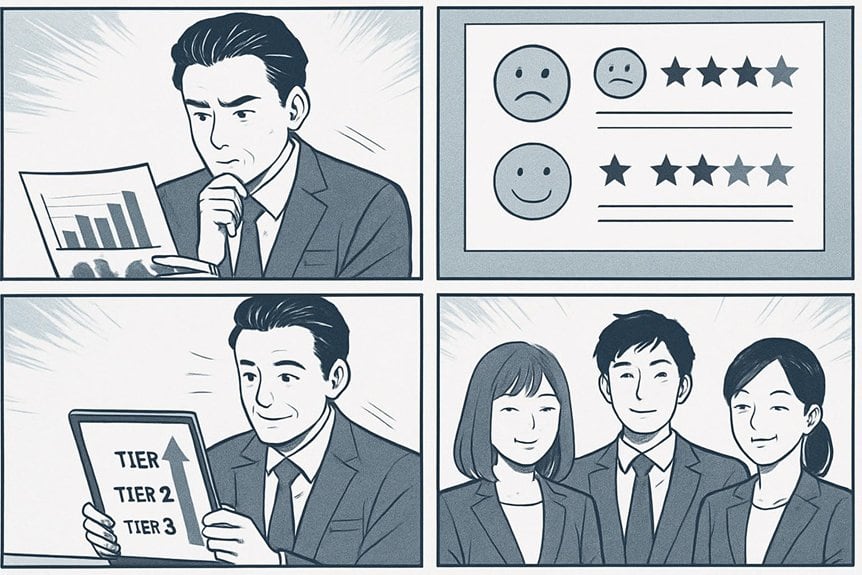
After the program’s been live for a few weeks, start tracking key metrics so you can see what’s working and what needs fixing. Focus on participation rate, repeat purchase rate, average transaction value, and redemption frequency.
After a few weeks, track participation, repeat purchases, average spend, and redemption frequency to spot fixes.
Use simple dashboards or your POS to compare pre-launch baselines with current performance. Gather qualitative feedback through short surveys or brief conversations to understand motivations and pain points.
Identify low-performing rewards, confusing rules, or technical hurdles, then prioritize fixes that boost engagement with minimal cost. Test changes one at a time—tweak point thresholds, simplify steps to redeem, or add limited-time bonuses—and measure impact.
Keep iterating monthly, documenting results, and communicating improvements to members so they feel heard and stay involved.
Frequently Asked Questions
Can I Offer a Loyalty Program Across Multiple Locations or Franchises?
Yes — you can run a loyalty program across multiple locations or franchises. You’ll need centralized tracking, consistent rewards, clear franchise agreements, and shared data policies. Coordinate tech, branding, and training so customers get a seamless experience everywhere.
How Do Tax and Accounting Rules Apply to Loyalty Rewards?
They’re taxable and must be tracked: you’ll record rewards as liabilities when issued and as expenses when redeemed, include discounts or free items in sales reporting, and follow local tax rules for VAT, income, and promotional deductions.
What Privacy Laws Affect Collecting Customer Data for Loyalty Programs?
You must follow data protection laws like GDPR, CCPA/CPRA, and local privacy statutes; you’ll need lawful bases, clear consent, opt-out rights, data minimization, security measures, and breach notification processes to collect loyalty program data.
Should I Integrate Loyalty With Third-Party Delivery or Marketplace Platforms?
Yes — but cautiously. You’ll happily widen reach and sales via third‑party delivery or marketplaces, yet you’ll also dilute data control, brand intimacy, and margins, so negotiate data access, fees, and integration rules before diving in.
How Do I Handle Fraud, Abuse, or Reward Disputes?
You’ll prevent and resolve fraud by monitoring transactions, setting clear rules, verifying suspicious activity, requiring receipts or IDs for redemptions, using rate limits, offering an appeal process, and documenting decisions to guarantee consistent, fair dispute resolution.
Conclusion
You’ve set goals, picked rewards your customers actually want, made tracking painless, and launched with a plan — and now you’ll watch loyalty grow. Coincidentally, the best surprises happen when effort meets timing: a casual visit turns into repeat business, and a thank-you note sparks referrals. Keep measuring and tweaking, and you’ll find small changes create big returns. Stick with it, and loyalty will show up right when you need it.