
You can boost retention and revenue with three simple programs. First, a points-based loyalty plan that rewards cleanings, exams and fluoride — give bonus points for on-time visits and let patients track balances in an app for discounts or products. Second, offer referral and verified-review rewards like credits or free hygiene items. Third, create tiered memberships that bundle cosmetic perks and priority scheduling. Keep descriptions clear and measurable, and continue to investigate how each option performs.
Key Takeaways
- Loyalty points for routine care: earn points for cleanings, exams, fluoride, plus on-time bonuses redeemable for discounts or products.
- Referral and review incentives: fixed reward for new-patient referrals and smaller verified-review rewards redeemable as account credit or discounts.
- Tiered membership plans: monthly tiers (basic, mid, premium) offering preventive coverage, cosmetic discounts, and priority scheduling.
- Easy enrollment and communication: sign-up at checkout or online, with portal/app balance tracking and reminder notifications.
- Measure and optimize: track uptake, retention, and revenue per patient to adjust rewards, earning rates, and cosmetic perk offerings.
Loyalty Points Program for Routine Care
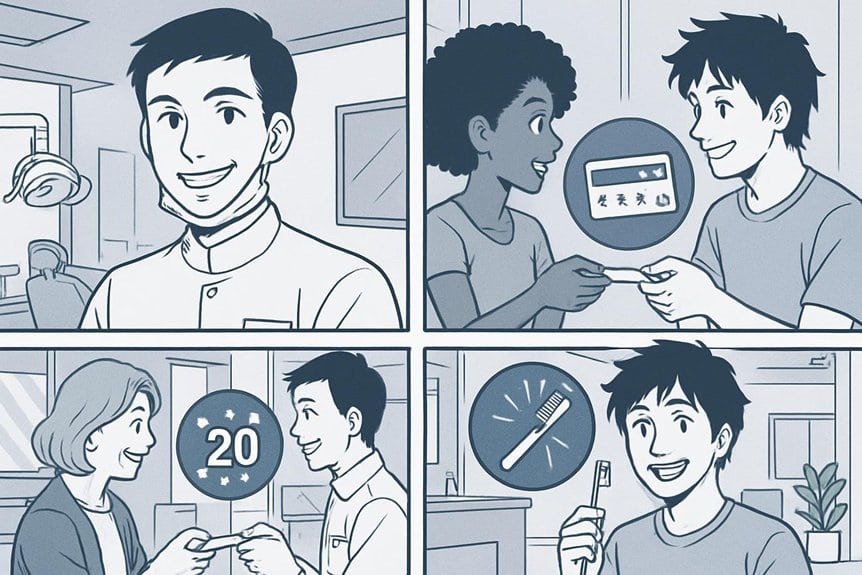
Often, patients stick with the same dental office when they feel recognized, so a loyalty points program for routine care rewards that consistency. You’ll set clear earning rules: points per cleaning, exam, or fluoride treatment, with bonus points for on-time appointments.
You’ll let patients track balances via your portal or app and redeem points for discounts on future preventive services, dental products, or expedited scheduling. Keep tiers simple — for example, silver, gold, platinum — so patients quickly see benefits for continued care.
Make enrollment easy at checkout or online and remind patients about points before visits. Measure program impact with retention and appointment adherence metrics, then adjust earning rates or rewards to boost preventive care uptake.
Referral and Review Incentive System
Turn happy patients into enthusiastic advocates by offering clear, simple incentives for referrals and online reviews. You want a system that’s easy to understand and track, so patients act. Offer rewards that fit your practice values and stay compliant with regulations.
- Reward structure: give a fixed reward for a referral and a smaller one for a verified online review.
- Verification: require the new patient’s mention or a review confirmation link to validate the incentive.
- Redemption: let patients choose discounts on cleanings, free hygiene products, or account credit—simple, immediate options.
- Promotion: train staff to explain the program, add reminders to receipts and emails, and showcase success stories to boost participation.
Tiered Membership With Cosmetic Perks
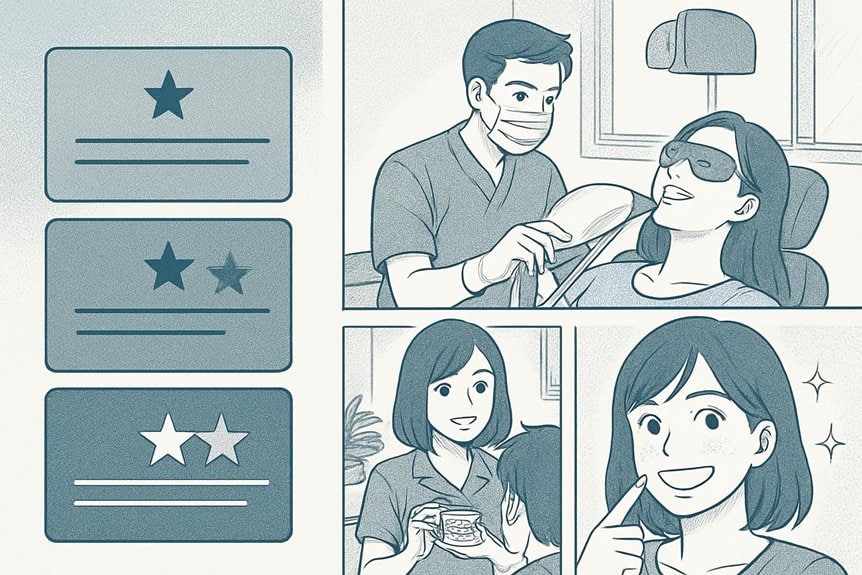
If you want to deepen patient loyalty and boost elective revenue, a tiered membership with cosmetic perks gives people clear choices: basic maintenance at a low monthly fee, a mid tier that adds teeth-whitening or discounted cosmetic consults, and a premium level that bundles major cosmetic procedures or priority scheduling.
You’ll attract different patient segments by matching benefits to willingness to pay. Keep tiers simple, with transparent pricing and measurable savings so patients easily compare value.
Use enrollment triggers—routine visits, broken teeth, consults—to offer upgrades. Track uptake, retention, and average revenue per patient to refine offerings.
Promote tiers through your website, front-desk conversations, and post-visit emails. Regularly refresh cosmetic perks to maintain interest and justify renewals.
Frequently Asked Questions
How Do Rewards Affect Insurance Reimbursements and Billing?
Rewards programs don’t directly change insurance reimbursements; you’ll bill insurance as usual. If you’re offering discounts or freebies, you’ll need to avoid balance billing and document adjustments properly so claims and patient responsibility stay accurate.
Can Rewards Be Offered to Pediatric Patients Under Guardianship?
You can, but play it safe: you’ll need guardian consent, documented authorization, and compliance with state laws and HIPAA. Keep rewards modest, avoid cash equivalents, and guarantee policies uniformly apply to prevent disputes or perceived favoritism.
What Legal Disclosures Must Be Shown in Marketing Materials?
You must disclose program terms, eligibility, redemption rules, expiration dates, privacy and data use, any value or tax implications, state-specific legal notices, and contact info; avoid deceptive claims and guarantee HIPAA-compliant language throughout marketing materials.
How Do Rewards Programs Handle HIPAA and Patient Privacy?
Think of rewards as a locked treasure chest: you’ll only share necessary, de-identified data, get patient consent, limit access, and encrypt transfers. You’ll follow HIPAA, audit partners, and promptly address breaches to protect privacy.
Can Rewards Be Combined With Community Outreach or School Programs?
Yes — you can combine rewards with community outreach and school programs. You’ll offer incentives for participation, track activities without PHI, partner with organizations, and promote oral health while rewarding engagement and building trust in the community.
Conclusion
Think of your practice as a garden: loyalty points are the steady rain, referrals and reviews are the buzzing bees, and tiered cosmetic perks are the sunlight that makes smiles bloom. You plant each program with intention, tend them consistently, and watch patient relationships grow into a thriving ecosystem. Choose the mix that fits your soil, nurture it regularly, and your practice will harvest healthier mouths, happier patients, and a reputation that blossoms.