
You can protect and grow your plumbing business by proactively managing reviews, customer interactions, branding, local listings, visual proof, and monitoring. Ask for reviews right after jobs, train techs on greetings and clear explanations, respond fast to negative feedback with a fix, standardize your brand voice and visuals, optimize your Google Business Profile, showcase before-and-after photos and short case studies, and set alerts for mentions. Keep going for practical steps and templates to implement these tips.
Key Takeaways
- Ask for reviews immediately after a job, provide one-click links, and offer short suggested wording to boost response rates.
- Use high-quality before-and-after photos and short case studies with client permission to showcase workmanship.
- Train technicians on greeting, clear explanations, punctuality, and tidy appearance to improve first impressions and reviews.
- Monitor listings and reviews daily, respond professionally within 24 hours, and take negative feedback offline to resolve.
- Maintain consistent brand voice and visuals across van, website, uniforms, and message templates for recognizability.
Ask for Reviews Immediately After a Job
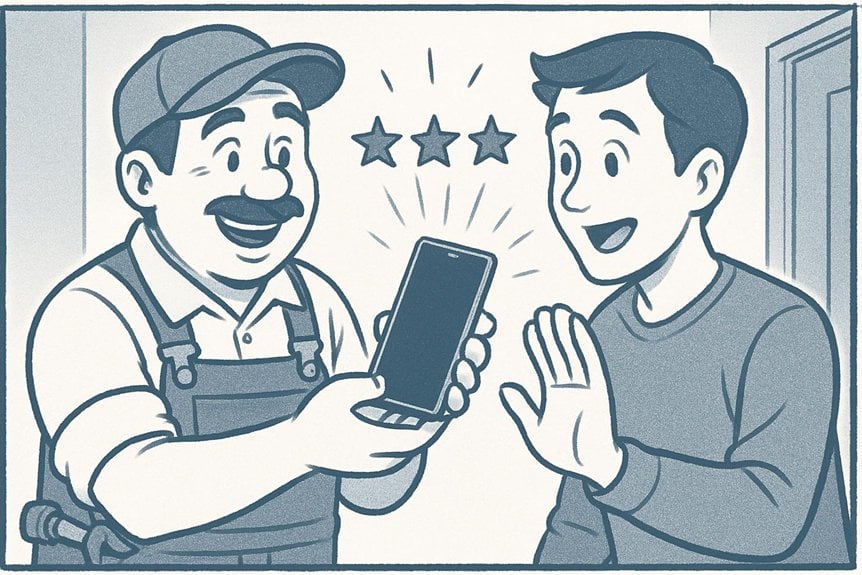
Don’t wait—ask for a review right after you finish the job while the work and customer satisfaction are fresh.
Ask for a review immediately after completing the job while customer satisfaction and appreciation are freshest.
You’ll catch the moment when the customer’s relief and appreciation are strongest, so request a quick review in person or via a brief follow-up text.
Make it simple: provide one or two direct links to your Google or industry-specific profiles, suggest a short sentence about punctuality or workmanship, and offer to help if they’d like wording.
Keep your tone friendly and professional, and mention that reviews help you continue offering reliable service.
If they’re busy, ask permission to send a one-click review link.
Repeat this routine after every positive job to steadily build trustworthy online proof.
Respond Quickly and Professionally to Negative Feedback
When a customer posts a negative review, respond quickly and professionally to show you take concerns seriously and to limit damage to your reputation. A prompt reply calms upset customers and signals to others you care.
Acknowledge the issue, apologize without admitting fault prematurely, and offer a clear next step—phone call, inspection, or refund—so the customer knows you’ll fix it. Take the conversation offline for details and resolution, then follow up publicly to note the outcome.
Keep messages concise, polite, and specific; avoid defensiveness or copy-paste replies. If a review is false or abusive, report it to the platform with documentation.
Consistent, professional handling turns many complaints into testimonials about your responsiveness.
Standardize Your Brand Voice and Visual Identity
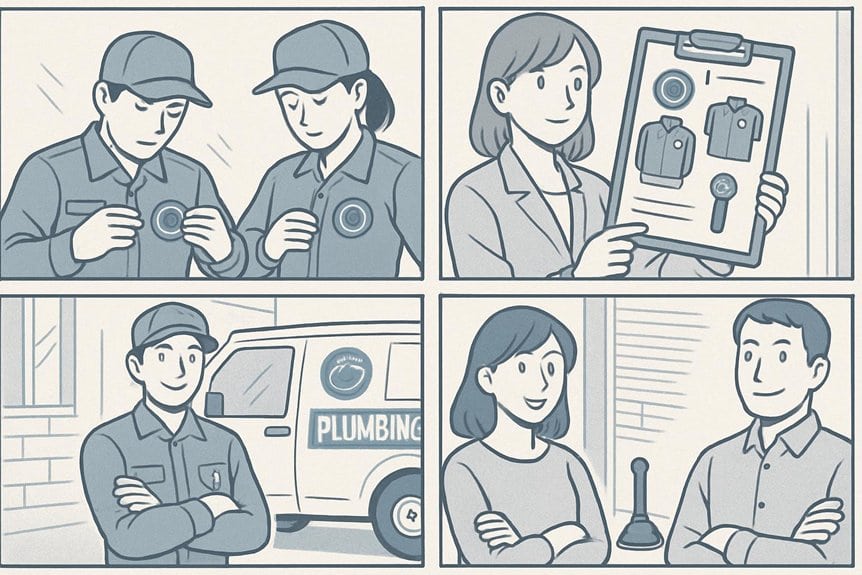
Keep your tone consistent across social, email, and voicemail so customers know what to expect from you.
Use a unified logo and color palette on your van, website, and uniforms to build instant recognition.
Create standardized messaging templates for quotes, follow-ups, and review responses to save time and keep your brand consistent.
Consistent Tone Across Channels
Consistently using the same tone and visuals lets customers recognize your plumbing business instantly, so decide now how you want to sound and look across ads, emails, social media, and invoices.
Choose a voice—friendly expert, straightforward professional, or helpful neighbor—and stick to it. Create short guidelines: preferred vocabulary, sentence length, and formality level. Train anyone who writes for you so responses, appointment reminders, and reviews all match.
Match message pacing too: prompt, empathetic replies for complaints; concise, confident language for service confirmations. Use templates for common replies to keep phrasing consistent without sounding robotic.
Monitor channels regularly and correct deviations quickly. Consistency builds trust, reduces misunderstandings, and makes your service feel reliable every time customers interact with your brand.
Unified Logo and Colors
A single, recognizable logo and a fixed color palette make your plumbing brand easy to spot across trucks, uniforms, ads, and invoices, so decide on one version and stick with it. Choose a primary logo and simplified variations for tight spaces, then lock down exact color codes (HEX, RGB, CMYK) so every vendor matches your look.
Apply colors consistently to vehicle wraps, workwear, website accents, and printed materials to build instant recognition. Train staff and contractors to use approved files and placements, and keep a simple brand guide with do’s and don’ts.
When your visual identity is unified, customers trust your professionalism before you even arrive — and that trust protects your reputation and boosts referral business.
Standardized Messaging Templates
Lock down a set of messaging templates so your team speaks the same clear, professional language whether they’re replying to reviews, sending appointment confirmations, or posting on social media.
Create concise, customizable templates for common scenarios: positive and negative review responses, appointment reminders, service follow-ups, invoices, and emergency calls.
Define tone—friendly, confident, helpful—and set vocabulary rules (avoid jargon, use “we’ll” not “we will” if casual).
Include signature format, logo placement, and contact lines to keep visuals consistent across channels.
Train staff on when to use templates and how to personalize them briefly without changing intent.
Regularly review and update templates based on feedback and performance metrics to keep your brand voice sharp and reliable.
Optimize Your Google Business Profile and Local Listings
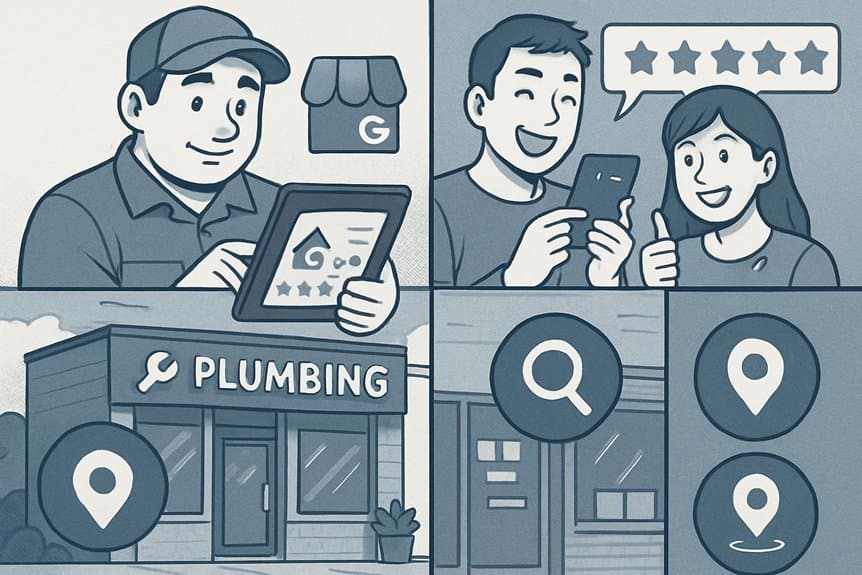
Updating your Google Business Profile and local listings guarantees people find the right info fast, so check that your name, address, phone, hours, and services are accurate and match across every directory.
Keep photos current—job photos, team shots, and your logo—to build trust.
Use concise service descriptions with relevant keywords (e.g., emergency plumbing, drain cleaning) so local searches pick you up.
Monitor and respond to reviews promptly; thank satisfied customers and address issues professionally to show you care.
Make sure categories and attributes are correct, enable messaging and booking if available, and publish posts for promotions or seasonal tips.
Regular audits prevent mismatches that hurt rankings and confuse customers, helping local visibility and lead flow.
Train Technicians in Customer Communication and Courtesy
Make sure your team follows a clear greeting protocol so every customer feels acknowledged the moment you arrive.
Teach active listening techniques so technicians actually hear concerns, repeat key points, and confirm solutions.
Set professional appearance standards to reinforce trust and leave a positive, consistent impression.
Clear Greeting Protocols
Always start with a clear, consistent greeting so your technicians set the right tone the moment they arrive; teach them to introduce themselves, state the company name, and confirm the customer’s name and issue within the first 10–20 seconds.
You should give technicians a short script that feels natural — name, company, purpose, and a quick courtesy line like “May I come in?” — then practice until it’s smooth.
Emphasize professional tone, appropriate volume, eye contact, and a friendly smile.
Teach them to state expected next steps briefly: estimated time, immediate safety measures, and whether they’ll need to inspect first.
Make sure every greeting ends with permission to proceed or a question that invites the customer’s confirmation, creating immediate trust and clarity.
Active Listening Techniques
Start by teaching your technicians to tune in fully to the customer’s words and tone, then mirror back key points to confirm understanding. Train them to ask concise, open-ended questions like “Can you show me where the leak started?” and pause to let the customer finish before responding.
Encourage short summaries: “So the noise started after the shower, correct?” That prevents assumptions and builds trust. Teach technicians to acknowledge emotions—frustration or urgency—without interrupting, using phrases such as “I understand this is stressful.”
Practice silence and note-taking so details aren’t lost. Role-play common scenarios to build muscle memory for calming language and clear confirmations. Consistent active listening reduces misunderstandings, speeds diagnosis, and leaves customers feeling respected and confident in your service.
Professional Appearance Standards
Frequently, a technician’s appearance is the first thing a customer judges, so make sure your team presents a clean, uniformed look that signals competence and respect.
You should train technicians to greet customers promptly, introduce themselves, and explain the job clearly. Teach them to wear pressed uniforms, visible name tags, and carry branded tools and mats to protect floors. Emphasize punctuality, neat grooming, and a polite tone.
Role-play scenarios that combine technical explanations with empathy so they can answer questions without jargon. Reinforce that small courtesies build trust and online reviews.
- Clean uniform, name tag, shoe covers
- Clear introduction, estimated time, concise explanation
- Respectful behavior: ask before entering, tidy up after work
Showcase Before-and-After Photos and Case Studies
When you show clear before-and-after photos and short case studies, potential customers see the real value of your work and trust you more quickly.
Use high-quality images that highlight the problem, your solution, and the finished result. Caption each photo with a concise description: issue, action taken, materials used, and outcome.
Keep case studies short—one to three paragraphs—focusing on the challenge, your approach, and measurable benefits like reduced leaks or restored flow.
Include client permission and a brief testimonial when possible.
Organize examples by service type (repairs, replacements, remodels) so visitors find relevant proof fast.
Regularly update the gallery to reflect current standards and show you consistently deliver reliable, professional results.
Monitor Online Mentions and Set Up Reputation Alerts
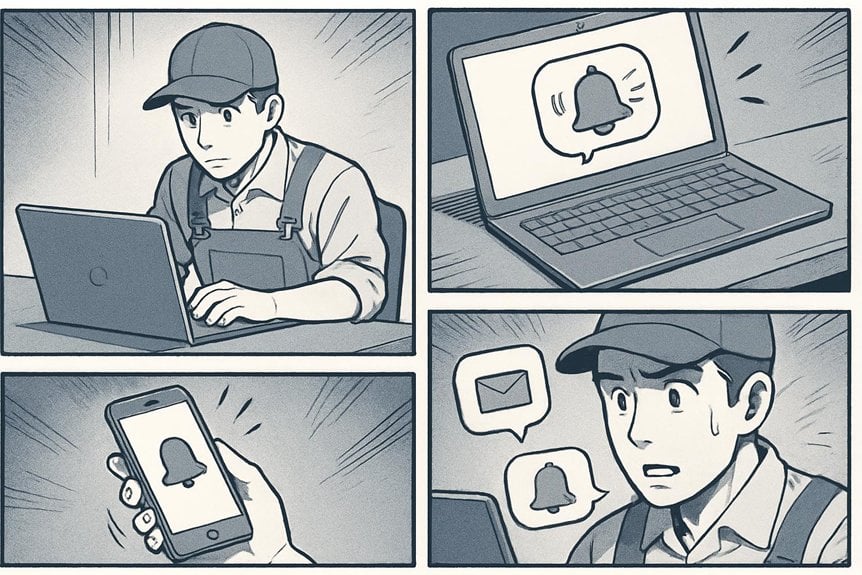
Because online conversations shape how people find and judge your business, set up alerts and monitor mentions so you can respond quickly and control the narrative. You’ll catch praise, complaints, and opportunities before they spread.
Use Google Alerts, social listening tools, and direct platform notifications to track your business name, common misspellings, and service keywords. Prioritize alerts so urgent issues reach you first, and craft short, professional response templates for praise, questions, and complaints. Document incidents and your replies to spot patterns and training needs.
Visualize monitoring like this:
- A dashboard flashing a new negative review.
- A notification for a glowing customer photo.
- A search returning repeated issues pointing to a training gap.
Stay proactive, respond within 24 hours, and learn from what you see.
Frequently Asked Questions
How Do I Handle Reviews From Third-Party Vendors or Suppliers?
You should respond promptly, thank them, and address concerns professionally; offer to resolve issues offline, verify facts with your team, encourage honest updates after fixes, document interactions, and maintain polite transparency to protect your reputation and vendor relationships.
Can I Legally Offer Incentives for Customer Reviews?
You can sometimes offer incentives, but you shouldn’t condition rewards on positive reviews; many platforms and laws prohibit that. Offer a general incentive for feedback, disclose any incentives, and check local regulations and platform policies first.
What Metrics Track Long-Term Reputation Improvement?
Think of reputation as a garden: you’ll track review volume and average rating, sentiment trends, net promoter score, response time, referral rates, repeat customers, social mentions, and search ranking to measure long-term improvement.
Should I Combine Multiple Locations Under One Google Business Profile?
No — you shouldn’t combine multiple locations under one Google Business Profile; Google requires separate listings per physical location, and combining them will confuse customers, hurt local SEO, and risk suspension, so keep distinct profiles for each address.
How Do I Respond to Fake Reviews Without Escalating Legally?
Like a calm tide, you’ll acknowledge the review, thank the reviewer, offer to resolve the issue privately, provide contact details, document harassment, flag violations to the platform, and avoid threats or public arguments that could escalate legally.
Conclusion
You’ve got practical, proven steps to protect and grow your plumbing reputation — now act on them. Remember: 90% of consumers read online reviews before hiring a local service, so asking for reviews and responding fast isn’t optional. Keep your brand consistent, train your techs, showcase work, and monitor mentions daily. Do these things and you’ll turn satisfied customers into steady referrals, stronger leads, and a more trusted local presence.