
Costs vary widely, but you’ll typically spend anywhere from a few hundred dollars to several hundred thousand a year on a loyalty program depending on model, member scale, and reward complexity. Expect one-time setup (integration, design, legal) plus ongoing platform fees, reward liability, fulfillment, and staffing. Points and tiers raise tech and accounting needs; paid memberships shift fulfillment and marketing costs. Keep budgets tied to projected CLV and test small first so you can learn what to scale.
Key Takeaways
- Basic punch-card or email-based loyalty programs can cost as little as $0–$500/month in software and minimal fulfillment.
- Points or tiered programs typically run $500–$5,000/month plus 5–15% of rewards and redemption fulfillment.
- Paid membership models require higher upfront platform/integration costs ($10k–$100k) and ongoing fulfillment and marketing.
- Expect initial setup (integration, design, legal, training) to add $5k–$50k depending on custom work and systems.
- Ongoing analytics, personalization, and staffing drive variable costs; budget for data storage, model compute, and support FTEs.
Why Loyalty Programs Matter for Your Bottom Line

Because retaining customers costs less than finding new ones, a well-designed loyalty program directly boosts your bottom line by increasing repeat purchases and average order value.
Retaining customers costs less than acquiring them — a smart loyalty program drives repeat purchases and higher order value.
You’ll reduce acquisition spend as loyal buyers return more often, and they typically spend more per visit because incentives nudge upsells and bundle purchases.
You’ll also see improved customer lifetime value, which makes forecasting revenue and allocating marketing budget more efficient.
Plus, satisfied members refer others, lowering your referral cost and widening organic reach.
Operationally, loyalty data helps you target promotions, cut wasted offers, and optimize inventory for high-demand items.
When you measure retention, average order value, and cost per acquisition together, you’ll understand program ROI and make smarter investment decisions.
Types of Loyalty Programs and How They Affect Cost
When you pick a loyalty model—points, tiers, paid memberships, or simple punch cards—you’ll immediately shape both upfront and ongoing costs. Points systems need tracking software and variable reward expenses. Tier programs drive higher per-customer rewards and require personalized communications. Paid memberships give predictable revenue but demand clear value and fulfillment costs. Punch cards are cheap but offer limited data and engagement.
| Model | Cost Drivers | Best For |
|---|---|---|
| Points | Software, rewards budget, fraud prevention | Frequent buyers |
| Tiers | CRM, higher rewards, segmentation | High-value customers |
| Paid | Platform, fulfillment, marketing | Loyal base seeking perks |
Choose the model that matches your budget, customer behavior, and long-term ROI goals.
One-Time Setup Expenses to Budget for
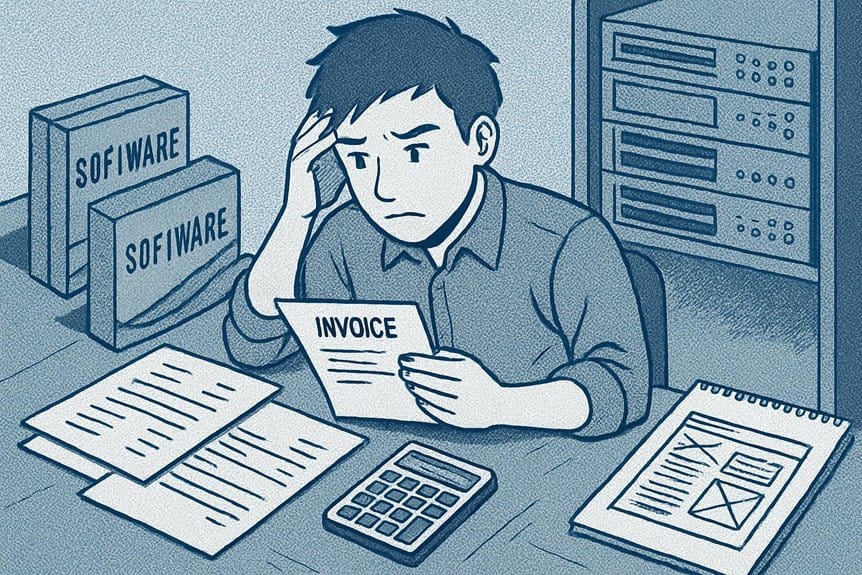
Choosing the right loyalty model sets the ongoing expenses, but you’ll also face upfront costs that shape your program’s launch and scalability.
You’ll pay for initial platform integration—API work, data migration, and any custom development to connect POS, CRM, and e-commerce.
Expect design and branding expenses: program name, logo, email templates, and UX for dashboards or mobile apps.
Budget for legal and compliance review, terms and privacy policy updates, and any certification needed for promotions.
Train staff with kickoff workshops and create documentation or help content.
If you use physical cards or promotional materials, include printing and fulfillment.
Finally, allocate funds for pilot testing and QA to catch issues before full rollout so your program starts strong.
Ongoing Software and Platform Fees
As your program moves from launch to live operation, you’ll keep paying for the software and platforms that run it — subscription fees, per-transaction charges, and any add-on modules for analytics or fraud protection.
Expect tiered plans: basic CRM and points tracking might be low monthly fees, while enterprise integrations, APIs, or omnichannel support raise costs.
Expect tiered pricing: simple CRM and points tracking are inexpensive, while enterprise APIs and omnichannel support increase costs.
Some vendors charge per-active-member or per-redemption, so forecast volume to avoid surprises.
Budget for regular updates, hosting, and security patches; managed services cost more but reduce internal IT burden.
Factor in reporting tools, A/B testing modules, and support SLAs.
Review contracts for hidden overage charges and renewal escalators, and compare total cost of ownership across vendors before committing.
Reward Costs: Discounts, Points, Gifts, and Fulfillment
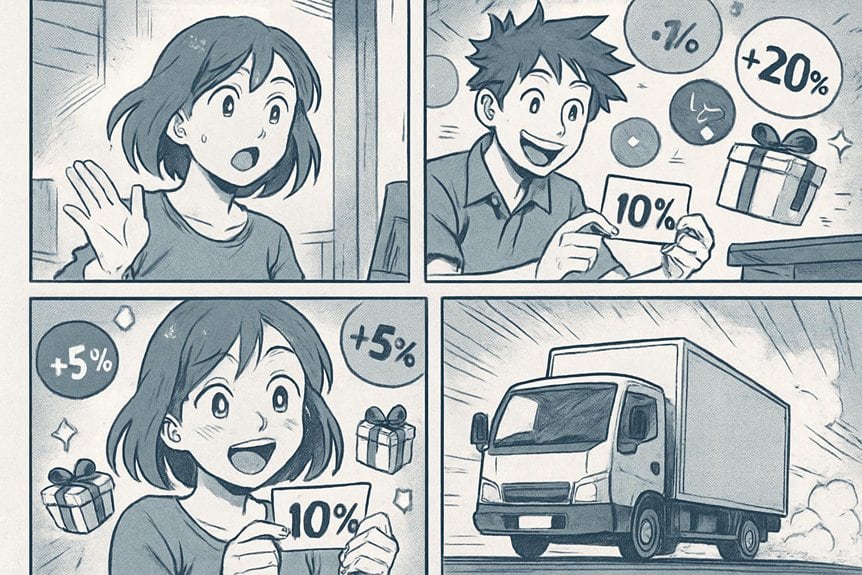
Because rewards are the visible cost customers care about most, you should break down every element—discounts, points liability, gifts, and fulfillment—so you can forecast true program expense and ROI.
Start by modeling discount uptake rates and average redemption value; small percentage increases can double liability.
For points, calculate breakage, expected redemption timelines, and the monetary value per point to reflect on-balance-sheet obligations.
For physical gifts, include unit cost, packaging, and returns.
For digital rewards, account for licensing or content fees.
Fulfillment adds shipping, handling, and customer service costs plus fraud mitigation.
Combine these into scenario-based forecasts (best, expected, worst) tied to lifecycle metrics so you can set funding reserves and adjust earn/redeem rules proactively.
Staffing and Training Expenses
When you build a loyalty program, don’t overlook the ongoing staff and training expenses that keep it running smoothly; plan for hiring, onboarding, coaching, and performance management so you can forecast headcount, hourly costs, and training materials accurately.
You’ll need people to administer points, resolve member issues, analyze data, and manage vendor relationships. Budget salaries, benefits, overtime, and any seasonal staffing spikes.
Include costs for developing curricula, e-learning modules, role-play sessions, certifications, and documentation updates as program features evolve. Factor in trainer time, external consultants, and lost productivity during learning curves.
Track training effectiveness so you can justify refreshes or role changes. Build a contingency for unexpected turnover and increased support during promotions or system migrations to avoid service gaps.
Marketing and Customer Acquisition Costs
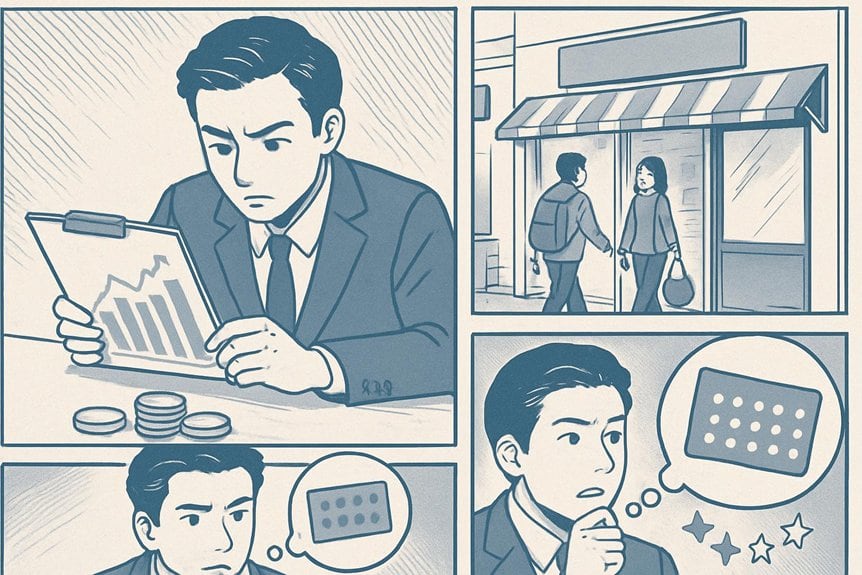
Staffing and training lay the groundwork for a program, but you’ll also need to invest in marketing and customer acquisition to grow and activate your member base. You’ll pay for channels like email blasts, social ads, in-store signage, referral incentives, and onboarding campaigns. Budget for creative development, media spend, and platform fees for campaign management.
Expect higher initial costs to build awareness, then lower ongoing spend to sustain engagement. Factor in incentives that drive sign-ups—discounts, bonus points, or limited-time offers—and the cost per acquisition you’re willing to accept.
Track conversion rates to optimize channels and reduce waste. Plan realistic timelines: acquisition often ramps slowly, so allocate a multi-month marketing budget to hit targets.
Data, Analytics, and Personalization Spend
You’ll need to budget for data collection infrastructure to capture customer behavior across channels.
Expect analytics tooling costs for processing and reporting, plus ongoing fees for a personalization engine that serves targeted offers.
Together these items can be a significant, recurring line in your loyalty program budget.
Data Collection Infrastructure
Because reliable insights depend on clean, connected data, your loyalty program needs a solid data collection infrastructure that covers tracking, storage, and governance. You’ll invest in tag management, event schemas, secure storage, and consent mechanisms so customer signals are accurate and compliant. Plan for instrumentation across web, mobile, POS, and call centers, plus pipelines that normalize and enrich events before they reach analytics. Governance reduces errors and privacy risk, while scalable storage controls cost as volume grows. Below is a simple cost-impact snapshot to guide prioritization.
| Component | Purpose | Typical Cost Driver |
|---|---|---|
| Tagging & SDKs | Capture events | Development time |
| Data Lake | Store raw events | Storage & egress |
| Governance | Quality & compliance | Policies & audits |
Analytics Tooling Costs
When you tie your data pipeline to analytics and personalization tools, you pay for more than licenses — you pay for model training, API calls, feature stores, and the orchestration that turns raw events into real-time recommendations.
You’ll incur compute for batch and streaming ETL, storage for historical features, and costs for monitoring and governance.
Plan for data scientist hours to build models, CI/CD for deployments, and third-party analytics platform metering.
- Model training and inference compute — variable with data size and frequency.
- Feature store and storage — keep engineered features accessible and consistent.
- Monitoring, logging, and governance — alerting, lineage, and compliance overhead.
Estimate these as recurring operational spend tied to usage, not one-time setup fees.
Personalization Engine Fees
Those analytics costs feed directly into your personalization engine fees, since providers charge not just for licensing but for data ingestion, feature computation, and real-time scoring.
You’ll pay for connectors that pull behavioral, transactional, and CRM data, plus storage and transformation costs tied to retention policies.
Feature pipelines—aggregation, enrichment, and sessionization—often bill per compute hour or per feature event.
Real-time decisioning adds expense: low-latency scoring, model hosting, and API calls scale with traffic.
You should budget for model retraining, experiment tracking, and evaluation compute.
Don’t forget monitoring, fallback logic, and privacy-compliance features that can raise costs.
Shop for transparent pricing, test projected usage, and plan margins to avoid surprises as personalization scales.
Legal, Tax, and Compliance Considerations
You’ll need to account for data privacy obligations when designing how you collect, store, and use member information.
You should also confirm the tax treatment rules for rewards and breakage in each jurisdiction to avoid unexpected liabilities.
Finally, build regular regulatory compliance checks into your program governance so you can spot and fix issues quickly.
Data Privacy Obligations
Because customer loyalty programs collect and store sensitive personal and transactional data, you must understand and meet a range of legal, tax, and compliance obligations that vary by jurisdiction. You’ll need clear consent mechanisms, data minimization, and secure storage to limit breach risk and regulatory fines. Build privacy-by-design into systems and contracts with vendors, and document processing activities for audits. Monitor retention schedules and deletion processes so you don’t hold data longer than necessary. Prepare breach response plans and notification procedures aligned with local laws.
- Map data flows, identify legal bases, and record processing activities.
- Implement access controls, encryption, and vendor due diligence.
- Train staff, test incident response, and keep privacy notices current.
Tax Treatment Rules
When customers earn or redeem rewards, tax rules can turn loyalty points into taxable events, so you need to nail down how your program will be treated by local and cross-border tax authorities.
Determine whether points count as discounts, promotional giveaways, or deferred revenue, since each has different VAT/sales tax and income tax implications.
Set clear accounting policies for point issuance, breakage (expired/unredeemed points), and redemption timing to avoid surprises on tax filings.
Track jurisdictional rules for cross-border redemptions and partner redemptions; tax residency and place-of-supply can change liability.
Consider withholding requirements for partner payouts and employee rewards.
Consult a tax advisor to model tax costs under likely redemption scenarios and update policies as laws evolve.
Regulatory Compliance Checks
Before launching (or expanding) a loyalty program, run a thorough regulatory compliance check so you know which laws and obligations will affect design, operations, and reporting. You’ll review data privacy rules, advertising and promotion laws, and financial reporting requirements.
Identify cross-border issues if you operate in multiple jurisdictions, and map obligations to program features like points expiry, disclosures, and refunds. Document processes for audits and incident response, and assign responsibility for ongoing monitoring.
- Assess data protection and consent needs (GDPR, CCPA, local laws).
- Verify advertising, sweepstakes, and redemption rules to avoid penalties.
- Make certain tax reporting, withholding, and accounting treatment are consistent.
Engage legal and tax advisors early to reduce surprises and budget for compliance.
Measuring ROI and Tracking Program Performance
To know whether your loyalty program is truly paying off, start by defining clear financial and behavioral metrics tied to business goals. You’ll track ROI by comparing incremental revenue and margin from members against program costs, and measure engagement via repeat purchase rate, average order value, enrollment growth, churn, and redemption patterns. Use cohort analysis and attribution windows to isolate program impact. Automate dashboards for timely insights and run A/B tests before rolling out changes. Regularly review data to adjust rewards mix and communication cadence, ensuring spend aligns with lifetime value improvements.
| Metric | Why it matters | How to measure |
|---|---|---|
| Incremental revenue | Direct ROI driver | Cohort vs control |
| Repeat rate | Loyalty strength | Purchases per period |
| Redemption rate | Program attractiveness | Redemptions/enrollees |
| CAC (member) | Cost efficiency | Marketing spend/enrollees |
Cost-Saving Strategies and Low-Budget Alternatives
Although a full-featured loyalty program can be powerful, you don’t need a big budget to build meaningful member value; start by prioritizing low-cost tactics that drive retention and measurable uplift.
You can focus on simple, high-impact moves that keep customers engaged without heavy tech or staffing costs.
Use existing channels, automate where it saves time, and trade discounts for experiences or exclusivity that cost less but feel valuable.
- Utilize email/SMS automation for targeted offers and birthday rewards to boost repeat visits.
- Use tiered recognition (badges, early access) instead of expensive monetary rewards to increase perceived value.
- Partner with complementary brands for cross-promotions that share costs and expand reach.
Track KPIs so small investments show clear returns.
When to Scale up or Rethink Your Loyalty Investment
Low-cost tactics will get you started, but you’ll know it’s time to scale up or rethink your loyalty investment when those tactics stop moving the needle or when growth opportunities outpace your current setup. Watch engagement metrics, repeat-purchase rates, and redemption costs; if growth stalls or costs spike, act. Consider tech limits, personalization needs, and partner opportunities before investing. Run small pilots, model ROI, and set clear thresholds for expansion or pivot.
| Signal | Action |
|---|---|
| Flat engagement | Test new rewards or channels |
| Rising costs | Reprice offers or tighten eligibility |
| Untapped segments | Pilot premium tiers or partnerships |
Decide within set timelines, measure outcomes, and stop or scale based on data — not instinct.
Frequently Asked Questions
Can Loyalty Program Costs Be Shared With Partners or Suppliers?
Yes — you can share loyalty program costs with partners or suppliers. You’ll negotiate contributions, benefits, and data use, split expenses for rewards or tech, and set clear agreements to guarantee fair value, reporting, and customer experience.
How Do Seasonal Promotions Affect Long-Term Program Budgeting?
Seasonal promotions force you to boost short-term rewards and marketing, so you’ll plan higher monthly reserves, build flexible budget lines, track ROI by season, and adjust long-term projections to absorb peak costs without breaking program sustainability.
What Hidden Costs Arise During Loyalty Program Migrations?
A vendor switch uncovered unexpected data-cleaning bills, so you face hidden costs like legacy data cleanup, integration bugs, downtime revenue loss, retraining staff, customer support spikes, API mismatches, and compliance remediation—plan buffers and phased rollouts to minimize surprises.
Will Loyalty Program Tax Treatment Vary Across Customer Locations?
Yes — tax treatment will vary by customer location. You’ll need to track local VAT/sales tax rules, nexus thresholds, cross-border complications, and differing deductibility; consult local advisors to guarantee compliance and accurate reporting.
How Quickly Can a Small Business Break Even on Loyalty Spending?
You can often break even within 3–12 months if you design rewards tied to repeat purchases, track incremental revenue, control reward costs, and promote enrollment. Small tweaks will speed payback and improve your program’s ROI.
Conclusion
Think of your loyalty program as a garden: plant thoughtfully, tend costs, and watch customer roots deepen. Start small with affordable software and clear rewards, prune needless fees, and measure what blooms. When the plot yields steady growth, scale up; if weeds of cost outweigh returns, redesign the landscape. With careful budgeting, legal checks, and ROI tracking, your loyalty garden can become a lasting orchard that keeps customers coming back season after season.